







Structured Data Governance
Structured Data Governance
Object relationships, validation rules, and access controls are defined before reporting begins. Standardized metric definitions ensure revenue, pipeline, and performance data are calculated consistently across departments, eliminating conflicting reports and strengthening trust in analytics outputs.

KPI-First Design
KPI-First Design
Revenue models, opportunity stages, and performance benchmarks are established before dashboard development starts. This ensures reporting reflects real business logic and operational targets, rather than simply visualizing unstructured or inconsistent raw data.

Cross-System Alignment
Cross-System Alignment
CRM, ERP, marketing, and operational systems are synchronized through structured data integration frameworks. This alignment removes reconciliation gaps and ensures dashboards represent a unified and accurate view of organizational performance.

Executive-Centered Reporting
Executive-Centered Reporting
Dashboards are designed around strategic decision needs instead of activity tracking alone. Leadership gains clear visibility into revenue health, pipeline risk, operational efficiency, and performance trends that directly support confident decision-making.

Forecast Discipline
Forecast Discipline
Probability models, stage governance, and historical trend analysis are structured to stabilize forecasting outputs. Predictive insights become consistent and reliable, enabling proactive planning instead of reactive adjustments to fluctuating projections.

Strategic Metric Discovery
Business objectives, revenue models, and reporting expectations are defined before system configuration.
Data Model Alignment
Objects, relationships, and governance frameworks are structured to support reliable reporting.

Dashboard Engineering
Executive dashboards and performance views are built around measurable outcomes and strategic clarity.

Integrated Intelligence
Salesforce is aligned with ERP, finance, and marketing systems to ensure data consistency across the enterprise.

Continuous Refinement
Analytics environments evolve with operational changes, ensuring long-term reporting integrity.
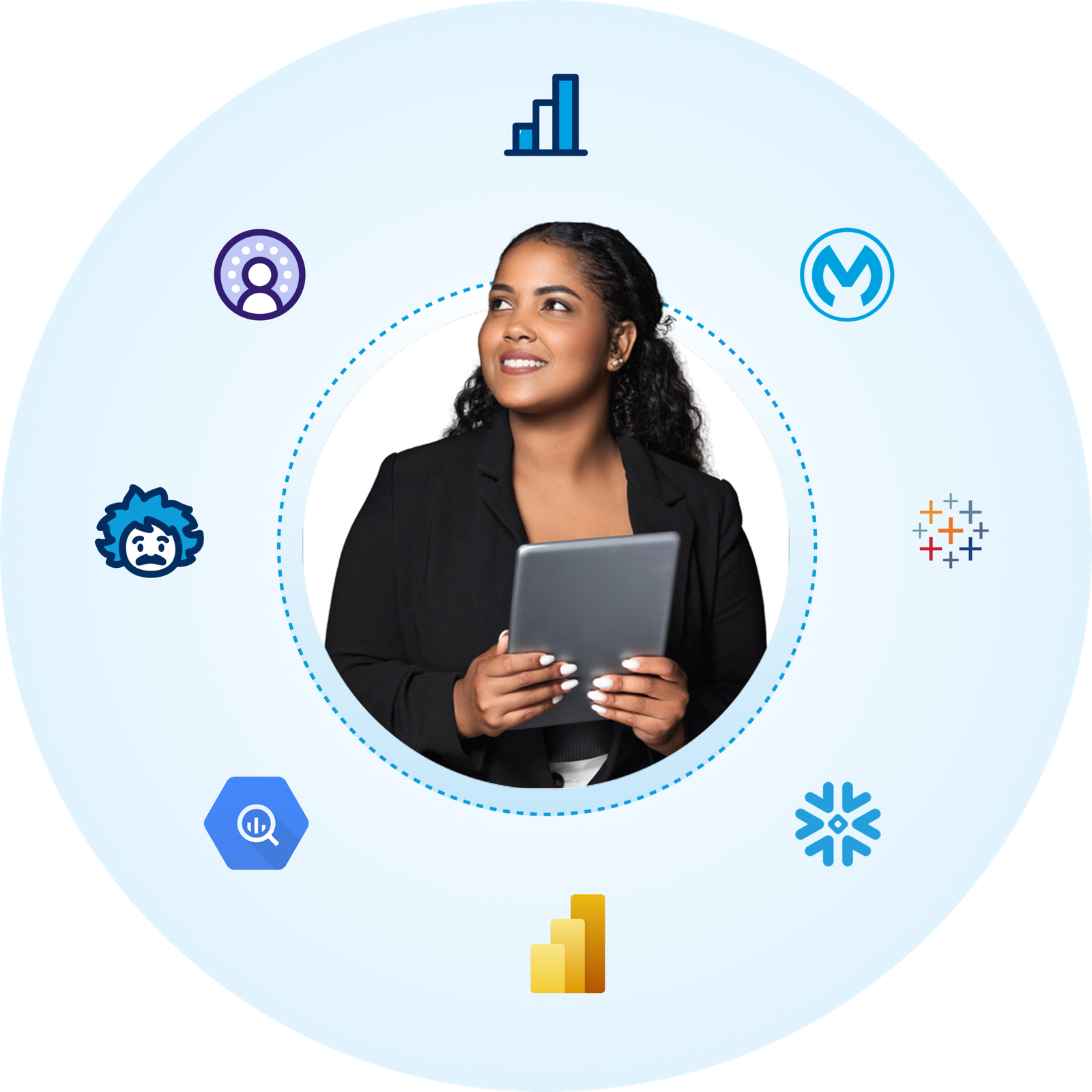
Salesforce Analytics & Intelligence Technology Ecosystem
- Core Analytics Platforms : Tableau, CRM Analytics (Tableau CRM), Data Cloud, Sales Cloud, Service Cloud
- Data Integration & Pipeline Layer : MuleSoft, API-led connectivity, ETL pipelines, enterprise data synchronization frameworks
- Data Modeling & Governance : Unified data models, governed datasets, semantic layers, and enterprise data catalog structures
- AI & Predictive Intelligence : Einstein Analytics, predictive forecasting models, anomaly detection, and executive intelligence dashboards


Greater Forecast Confidence
Structured opportunity governance and probability modeling create stable revenue projections that leadership can rely on for planning and investment decisions.
Clear Executive Visibility
Unified dashboards provide real-time insight into revenue performance, pipeline health, and operational metrics across departments and regions.
Reduced Manual Reporting Dependency
Automated data synchronization and governed reporting frameworks eliminate spreadsheet reconciliation and minimize manual intervention.
Cross-Department Performance Alignment
Standardized KPI definitions ensure sales, finance, marketing, and operations measure performance using consistent and validated metrics.
Faster Strategic Decision Cycles
Accurate, real-time analytics reduce delays in analysis, enabling leadership to respond quickly to risks and growth opportunities.
Scalable Governance Across Regions
Structured data models and reporting controls support multi-region operations while maintaining consistency, compliance, and centralized oversight.
Summit-Level Expertise
Certified Salesforce architects and analytics specialists deliver enterprise-grade BI programs backed by structured governance, cross-cloud experience, and proven delivery discipline.

Architecture-First Discipline
Analytics frameworks are designed on governed data models, standardized KPI definitions, and scalable structures rather than isolated dashboard builds.