







Salesforce B2B Commerce Cloud Implementation & Consulting Services
Your dealers and distributors already order online from other suppliers, and they expect the same from you: their own prices, live stock and an order history they can check without calling sales. We help manufacturers and distributors implement Salesforce B2B Commerce so buying from you is that easy.
As a Salesforce Summit Partner, we focus on the parts that decide whether a B2B store gets used: pricing rules, catalog access, ERP integration, and making sure your sales and service teams see every online order in Salesforce.
What is Salesforce B2B Commerce Cloud?
Salesforce B2B Commerce is the part of Salesforce Commerce Cloud built for selling to other businesses: distributors, dealers, wholesalers, partners and corporate buyers who order regularly and in volume.
In many companies, B2B ordering still runs on email, phone calls and spreadsheets of part numbers. Orders get keyed in twice, prices differ from what the customer was quoted, and nobody can say when an order will ship without checking three systems.
B2B Commerce gives each customer account its own view of your store: the products they are allowed to buy, the prices you agreed with them, quick order by part number, reorder from past orders and order tracking, all tied to their account in Salesforce.
The result is fewer order-entry mistakes, less time your sales team spends on routine orders, and customers who can buy from you at 10pm without waiting for a callback.
When Do Enterprises Need B2B Commerce Cloud?
Orders Still Arrive by Email
Complex Pricing & Product Catalogs
Dealers Who Want to Order Online
Limited Customer Self-Service
Systems That Don't Share Data
Growing Into New Regions or Brands
Not Sure Where to Start With B2B Commerce?
Talk to our Salesforce Summit Partner team. We'll look at how your customers order today, where your pricing and ERP data lives, and what the first version of your store should include.
Our Salesforce B2B Commerce Services
B2B Commerce Implementation
Storefront Design & Experience Optimization
Product Catalog & Pricing Configuration
Salesforce CRM & ERP Integration
Order Management & Workflow Automation
Customer Self-Service Enablement
Managed Services & Continuous Optimization
What Salesforce B2B Commerce Enables
- Customers order online without calling your team
- Each account sees its own products and prices
- Orders reach your ERP without being re-typed
- Dealers can order and check stock at any hour
- Live stock levels and order status for buyers
- Sales reps see online orders in Salesforce
- New regions and brands added without a new build
- Reorders take seconds instead of an email chain
Customizing B2B Commerce and Connecting It to Your ERP
Buyers expect to see their own prices, live stock and the status of last week's order. That information usually sits in your ERP, not in Salesforce, which is why integration decides whether a B2B store gets used or ignored. We connect B2B Commerce to Salesforce CRM, so your sales team can see what each account orders online, and to ERP systems such as SAP, NetSuite and Epicor for pricing, inventory, invoices and order status. Our Salesforce integration services cover the other systems we work with.
The standard product handles a lot on its own: buyer groups, entitlements, price books, quick order and reorder. We customize only where it does not match how you sell, such as contract prices that have to match the ERP exactly, an approval step before large orders go through, or a checkout with extra fields your finance team needs.
Salesforce Sales Cloud
Reps see each account's online orders, carts and quotes next to the rest of the customer record.
ERP & Inventory Systems
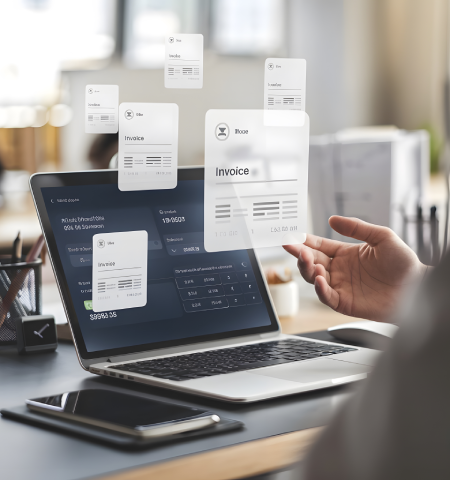
Prices, stock, invoices and shipping status come from your ERP, so the store never shows old numbers.

Revenue Cloud & CPQ
Complex quotes and contract pricing built in CPQ can flow straight into the buyer's store and cart.

Payment & Billing Platforms
Card payments, purchase orders and payment on account, with invoices synced back to finance.

Experience Cloud
The store runs on Experience Cloud, so dealer portals and self-service support can share one login.

MuleSoft-Based Integration Architecture
With many systems to connect, MuleSoft APIs link the store to ERP, warehouse and finance tools and can be reused later.Why Choose Us for Salesforce B2B Commerce?

Salesforce Summit Partner
We Know How B2B Buyers Order
Built Around How You Sell
Easy to Run After Launch
Industry Applications of Salesforce B2B Commerce
Salesforce B2B Commerce Implementation FAQs
It's used to sell to other businesses online. Distributors, dealers, wholesalers and corporate buyers log in, see the products and prices agreed for their account, place and repeat orders, and track deliveries, while your team sees all of it in Salesforce.
B2B Commerce is one part of Salesforce Commerce Cloud. It's built for selling to other businesses, with account-based pricing, bulk and repeat ordering, buyer approvals and payment on account. B2C Commerce is the separate product for selling to consumers. If your customers are dealers, distributors or other companies, B2B Commerce is the one to look at.
B2B Commerce stores run on Experience Cloud, so the store your buyers log in to is an Experience Cloud site with commerce built in. In practice, buyers get one login to browse their catalog, reorder and track orders, and you can add self-service case support to the same site. The store also works from the same Salesforce data your sales and service teams already use.
Yes, and it's one of its biggest advantages. B2B Commerce runs on the same Salesforce platform as Sales Cloud, so accounts, contacts, pricing and orders are shared rather than copied between separate systems.
Yes. It handles large catalogs, account-specific and tiered pricing, separate stores for different regions or brands, and buyer organizations with their own users and approval rules. In enterprise projects, most of the effort goes into data and integration rather than the platform itself.
Yes. Most companies connect it to their ERP for pricing, stock, invoices and order status, either with direct API integrations or through MuleSoft when several systems are involved. Get prices right first: buyers notice straight away when the store and the invoice disagree.
We're a Salesforce Summit Partner, and we treat B2B Commerce as an order-to-cash project rather than a website build. Pricing, ERP integration and the way your sales and service teams work get as much attention as the storefront.
The work that matters most happens before anyone designs a page. First you agree on who can buy what, at what price, and who approves orders. Then the store is set up, connected to your CRM and ERP, and tested with a handful of real buyer accounts before it opens to everyone. Storefront design comes last, because it's the easiest part to change later.
It mostly depends on how complicated your pricing is, how many systems the store has to talk to, and how clean your product data is. A store with standard pricing and one ERP connection is a far smaller project than a multi-country rollout with contract pricing. Be careful with any partner who gives you a firm date before they've seen your price lists and your ERP.
Yes, but configure first and customize second. Standard settings cover a lot of B2B needs, and every customization is something you'll have to maintain through Salesforce's three releases a year. Where it's worth it, developers extend the store with Lightning Web Components, Apex and Flow, for example to price items from your ERP at checkout or add a custom approval step.
Look for a Salesforce consulting partner that has built B2B stores and connected them to an ERP, since that's where most projects run into trouble. Ask to see a live store they've delivered and how they kept prices in sync. Inno Valley Works is a Salesforce Summit Partner, and our team is happy to review your plans before you commit to anything.
Ready to Plan Your Salesforce B2B Commerce Implementation?
Tell us how your customers order today and which systems hold your prices and stock. Our Salesforce specialists will tell you honestly what a first release should include and what can wait.