
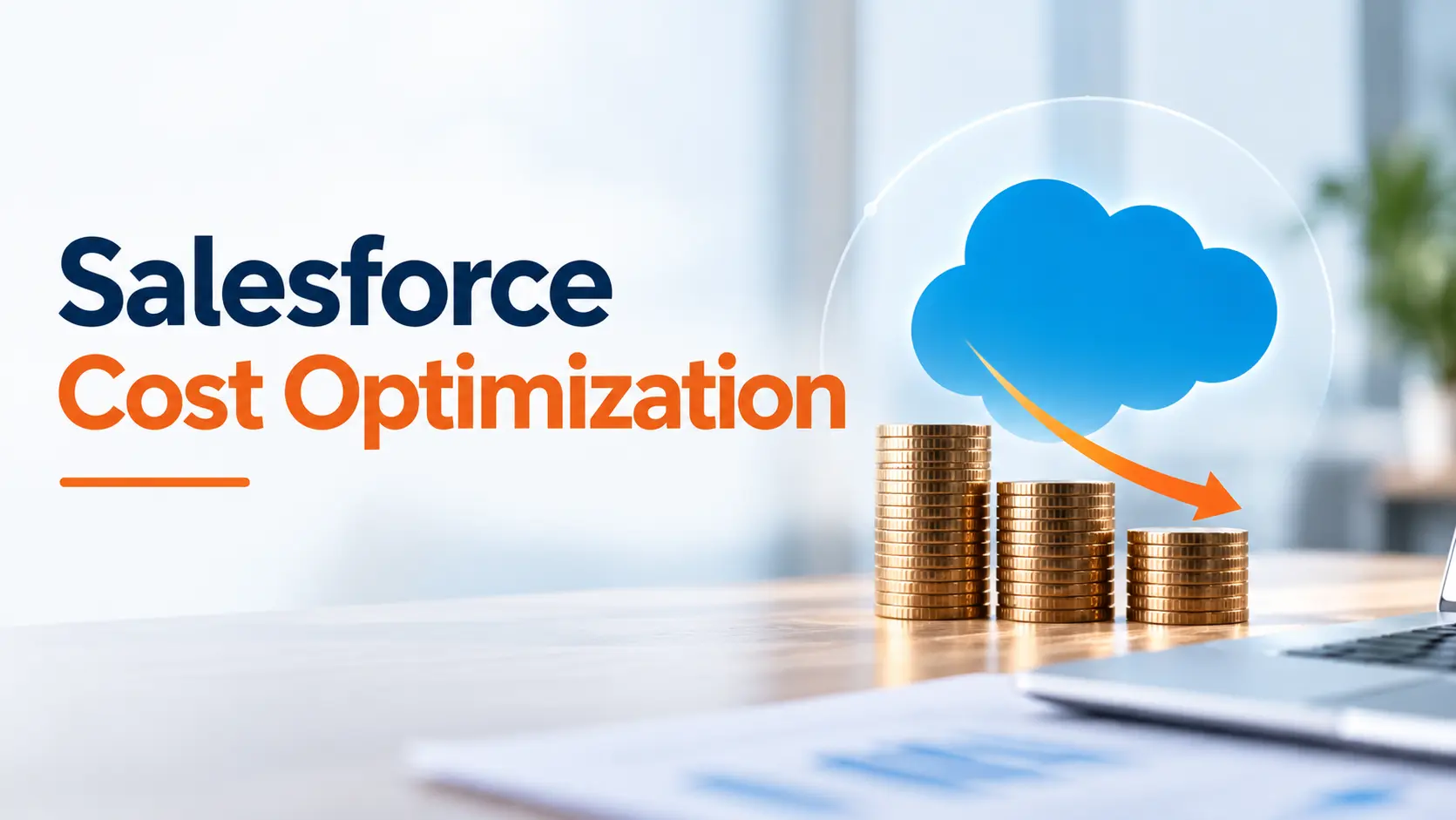

As businesses grow, Salesforce licensing costs can increase due to additional user licenses, product subscriptions, integrations and storage requirements. Regular Salesforce cost optimization helps organizations identify underutilized resources and align spending with actual business needs.
In this case study, Inno Valley Works helped a growing SaaS business assess its Salesforce environment and identify opportunities for Salesforce license optimization, storage management, integration efficiency and product entitlement alignment while maintaining essential business operations.
Common Salesforce Cost Challenges
The organization used Salesforce across Sales, Service, Operations, Marketing and Finance. As its requirements expanded, several cost-related challenges emerged:
- Rising licensing and add-on expenses.
- Underutilized licenses and misaligned user assignments.
- Increasing storage consumption from historical records and system logs.
- Integration processes potentially using more expensive license types than necessary.
- Product entitlements exceeding observed usage.
- Limited visibility into overall Salesforce expenditure.
The objective was to improve Salesforce cost management without compromising essential workflows or user access.
Our Approach to Salesforce Cost Optimization
Inno Valley Works reviewed the organization’s Salesforce environment to identify areas where spending could be better aligned with actual requirements.
1. Salesforce License Management and Right-Sizing
We reviewed user activity, assigned licenses, feature requirements, and departmental responsibilities to identify underutilized licenses and potential alternatives. This helped identify opportunities to improve Salesforce license utilization.
2. Edition and Add-On Review
We evaluated existing subscriptions and product capabilities to identify opportunities to align licensing with business needs and reduce unnecessary expenditure.
3. Salesforce Data Storage Optimization
We reviewed historical records and system logs to identify potential cleanup and archiving opportunities, considering appropriate data retention and access requirements.
4. Salesforce Integration License Review
We assessed how connected systems accessed Salesforce and evaluated whether suitable Salesforce Integration User licenses could replace standard user licenses for eligible integrations.
5. Product Entitlement Assessment
We compared purchased product capacity with observed usage to identify opportunities to align entitlements with business demand.
Key Outcomes
The assessment helped establish a clearer view of Salesforce utilization and potential optimization opportunities.
Key outcomes included:
- Better alignment between licenses and user requirements.
- Identification of unnecessary or underutilized subscriptions.
- Improved visibility into storage consumption.
- Evaluation of more suitable licensing options for eligible integrations.
- Better alignment between product entitlements and observed usage.
- A structured approach to Salesforce cost reduction while preserving essential functionality.
Optimize Your Salesforce Investment
Effective Salesforce license optimization involves more than reducing license counts. It requires understanding how teams use the platform, which capabilities they need and how integrations and storage contribute to overall expenditure.
Inno Valley Works provides Salesforce consulting services to help businesses assess their Salesforce environments and identify opportunities to align platform costs with operational requirements.
Want to identify potential savings in your Salesforce environment?
Contact Inno Valley Works to discuss your Salesforce cost optimization requirements.