
Salesforce Cost Optimization : Reducing Licensing Costs Without Disrupting Operations

Industry
Products
Customer Overview
As businesses scale, their Salesforce environments often grow more complex, with multiple licenses, add ons, integrations and increasing data storage requirements. Without regular usage reviews, organizations may end up paying for capabilities they rarely use.
Inno Valley Works helped a growing SaaS business optimize its Salesforce investment through a structured assessment of license utilization, product editions, storage consumption and integration requirements.
The objective was to reduce unnecessary recurring costs, align Salesforce licenses with actual business needs and maintain the functionality teams relied on every day.
The Challenge
The organization relied on Salesforce across multiple departments, including Sales, Service, Operations, Marketing and Finance. As adoption expanded, its Salesforce environment became increasingly expensive to maintain.
Key challenges included :
- Rising licensing costs: Increasing numbers of licenses and add-ons created significant recurring expenses.
- License underutilization: Users had access to capabilities that were not consistently used in their daily workflows.
- Misaligned license allocation: License types did not always match employee responsibilities or actual usage requirements.
- Excessive data storage: Historical records and redundant system logs consumed valuable storage capacity.
- Unnecessary integration licenses: Some system integrations relied on standard user licenses when more appropriate integration-specific options could be used.
- Over-provisioned product capacity: Certain platform entitlements exceeded actual business usage.
- Limited cost visibility: The organization lacked a clear, consolidated view of license utilization and optimization opportunities.
The business needed a cost-effective Salesforce environment without compromising essential workflows, operational continuity or team productivity.
A Data-Driven Salesforce Optimization Strategy
Inno Valley Works conducted a comprehensive review of the Salesforce environment to identify cost-saving opportunities while preserving critical business capabilities.
Salesforce License Utilization Assessment
Department-Level Requirements Analysis
License Mapping and Right-Sizing
Salesforce Edition and Add-On Optimization
Salesforce Data Storage Optimization
Integration User License Optimization
Product Entitlement and Capacity Right-Sizing
The Results
The Salesforce optimization initiative helped establish a more efficient and cost-conscious platform environment.
Key outcomes included :
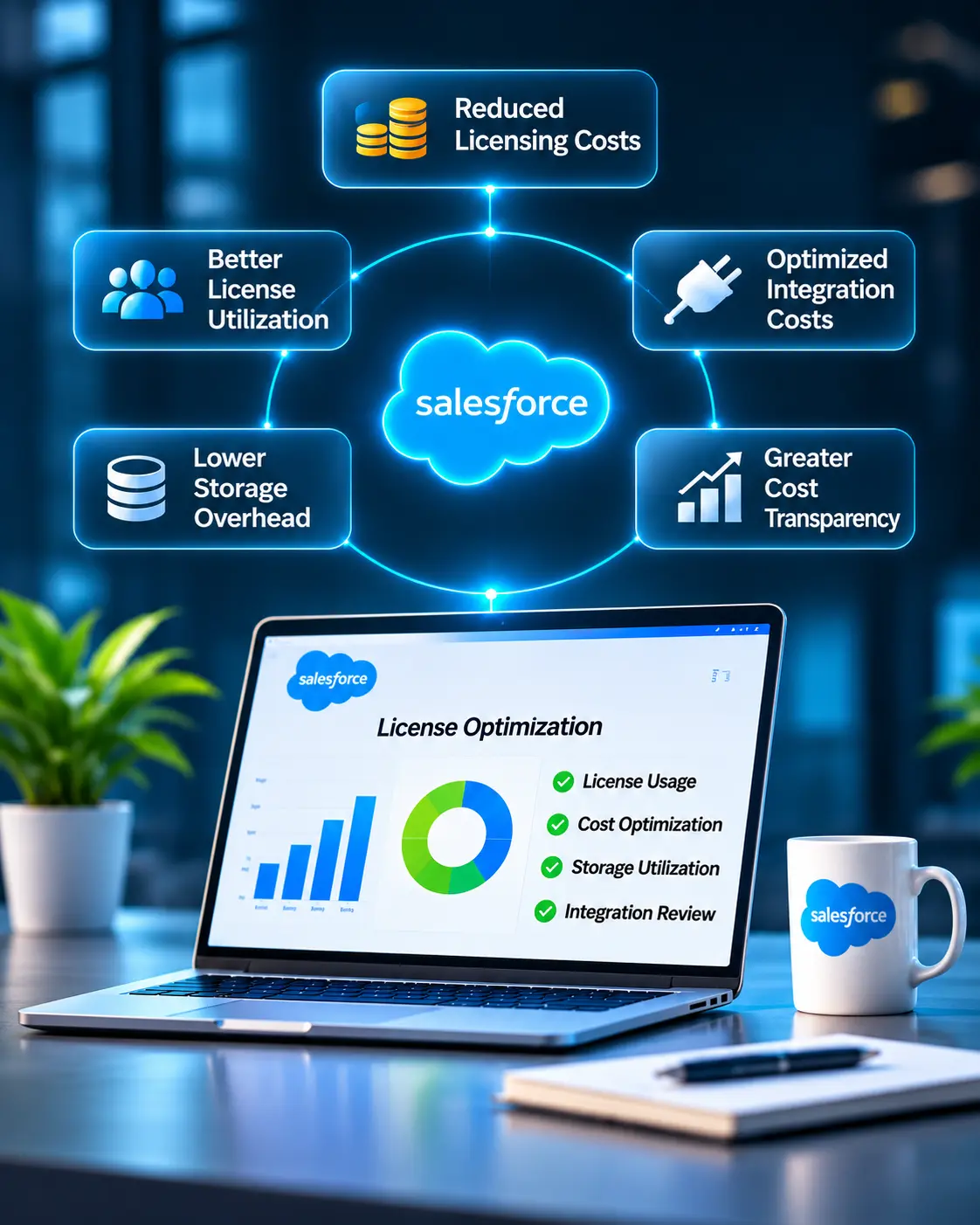
- Reduced recurring licensing costs by identifying unnecessary and over-provisioned subscriptions.
- Better license utilization through role-based allocation aligned with actual user requirements.
- Lower storage overhead through historical data review, log cleanup and appropriate archiving.
- Optimized integration costs by replacing unnecessary standard user licenses with suitable integration-specific options.
- Improved product entitlement alignment by matching purchased capacity with actual usage.
- Greater cost transparency through structured license mapping and usage analysis.
- Business continuity maintained by preserving the Salesforce capabilities required for essential operations.
The result was a more streamlined Salesforce environment designed to deliver business value without unnecessary platform expenditure.
Optimize Without Compromising Performance
Usage analysis and stakeholder input guided each decision, with essential workflows and team productivity kept in focus.
Review Platform Usage
Understand business needs
Optimize Resources
Protect operations
Looking to Optimize Your Salesforce Investment?
If your Salesforce costs are increasing faster than your business value, it may be time to review your licenses, product editions, storage consumption and integration setup.
Inno Valley Works helps businesses identify optimization opportunities and build a more efficient Salesforce environment aligned with their operational needs.